One Pot Nikujaga – Japanese Beef and Potato Stew Recipe
Introduction
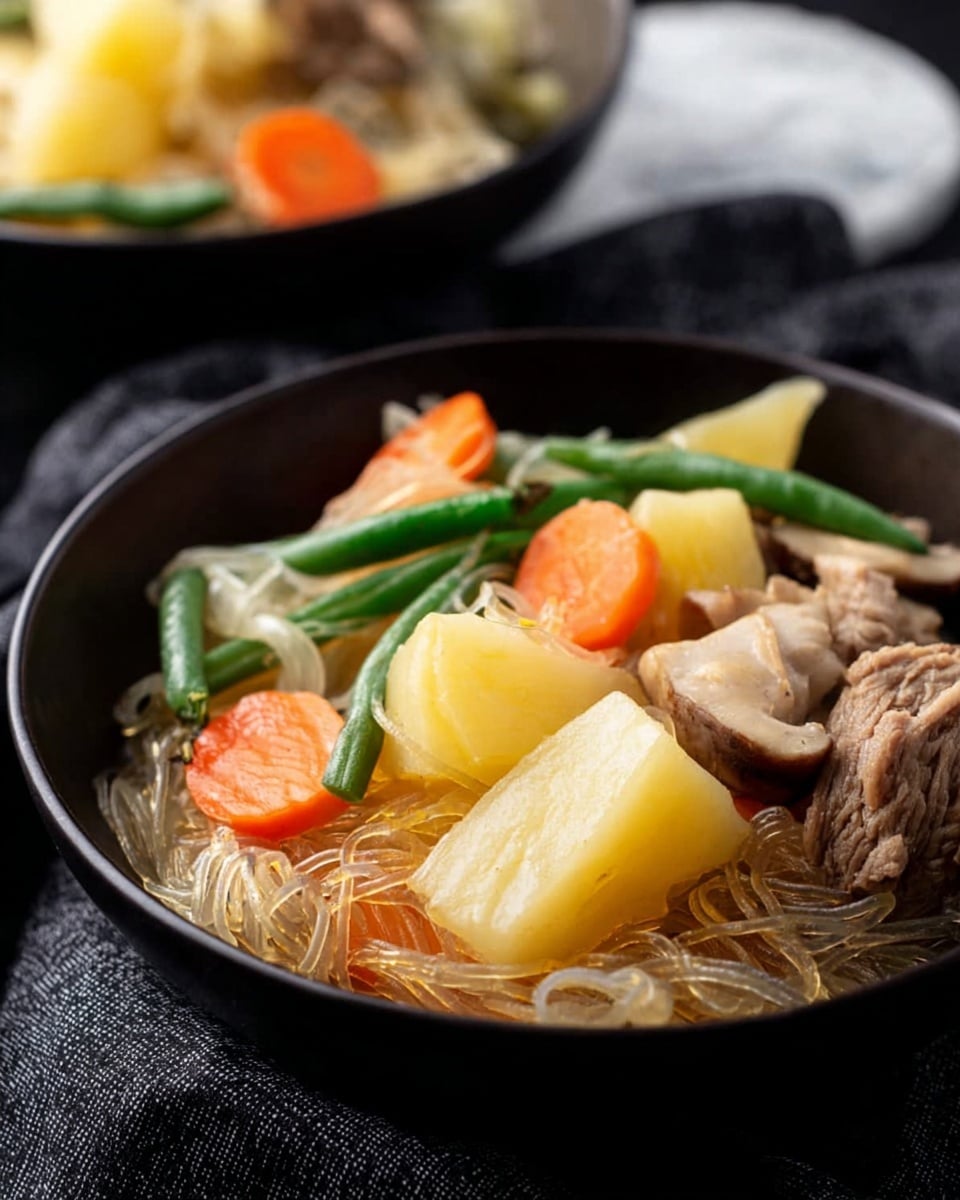
Nikujaga is a comforting Japanese stew featuring tender beef, potatoes, and a flavorful broth. This one-pot recipe brings together simple ingredients to create a hearty and satisfying meal perfect for any day of the week.
Ingredients
- 150 g thinly sliced beef
- 3 medium potatoes, diced (about 350 g / 12.34 oz)
- 1 small carrot
- 100 g shirataki noodles (about half a packet / 3.52 oz), konnyaku or sweet potato noodles as substitutes
- 1 onion, quartered (white or brown)
- 1 handful green beans, roughly chopped (snow peas or asparagus can be used)
- 2 ½ cups dashi stock (2.5 tsp dashi powder + 625 ml / 1.3 pints water)
- ¼ cup soy sauce (+ 1 tbsp, 65 ml / 2.19 fl oz)
- ¼ cup sake (30 ml / 1.35 fl oz), or Chinese rice wine
- 3 tbsp sugar (45 g / 1.58 oz)
- 2 tbsp mirin
- 1 tbsp vegetable oil
Instructions
- Step 1: Remove the shirataki noodles from the packet and cut them roughly in half. Place them in a bowl and cover with boiling water for a few minutes to remove odor, then drain and set aside.
- Step 2: Heat the vegetable oil in a medium saucepan over medium-high heat. Add the thinly sliced beef strips and fry for 1–2 minutes until browned.
- Step 3: Pour in the soy sauce, sake, sugar, and mirin. Let the beef soak up the flavors for another 1–2 minutes, stirring occasionally.
- Step 4: Add the diced potatoes, carrot, and quartered onion to the pan. Mix everything together, then add the drained shirataki noodles. Fry for another 1–2 minutes.
- Step 5: Pour in the prepared dashi stock and bring the mixture to a boil. Once boiling, reduce the heat to a low medium simmer.
- Step 6: Scoop off any foam that rises to the surface with a spoon and gently stir the stew. Cover the pan with a lid or an otoshibuta (Japanese drop lid), or alternatively use aluminum foil or a paper towel.
- Step 7: Simmer for about 10 minutes, or until the potatoes are tender when pierced with a fork or chopstick.
- Step 8: Remove the lid and add the green beans on top. Allow them to cook for about 1 minute, then turn off the heat.
- Step 9: Serve the nikujaga immediately, or let it cool and store in the refrigerator to reheat on low simmer later, which helps develop even deeper flavors.
Tips & Variations
- For a richer flavor, substitute half of the dashi stock with beef broth.
- If shirataki noodles are hard to find, sweet potato noodles or konjac noodles work well as alternatives.
- Add mushrooms such as shiitake or enoki for an earthy depth.
- Adjust the sugar and soy sauce quantities to taste, making the stew sweeter or saltier based on your preference.
- Using an otoshibuta helps the ingredients cook evenly and absorb flavors more effectively, but foil or paper towels are fine substitutes.
Storage
Store leftovers in an airtight container in the refrigerator for up to 3 days. Reheat gently on low heat to preserve the tenderness of the beef and prevent the potatoes from overcooking. Nikujaga often tastes even better the next day as the flavors meld together.
How to Serve
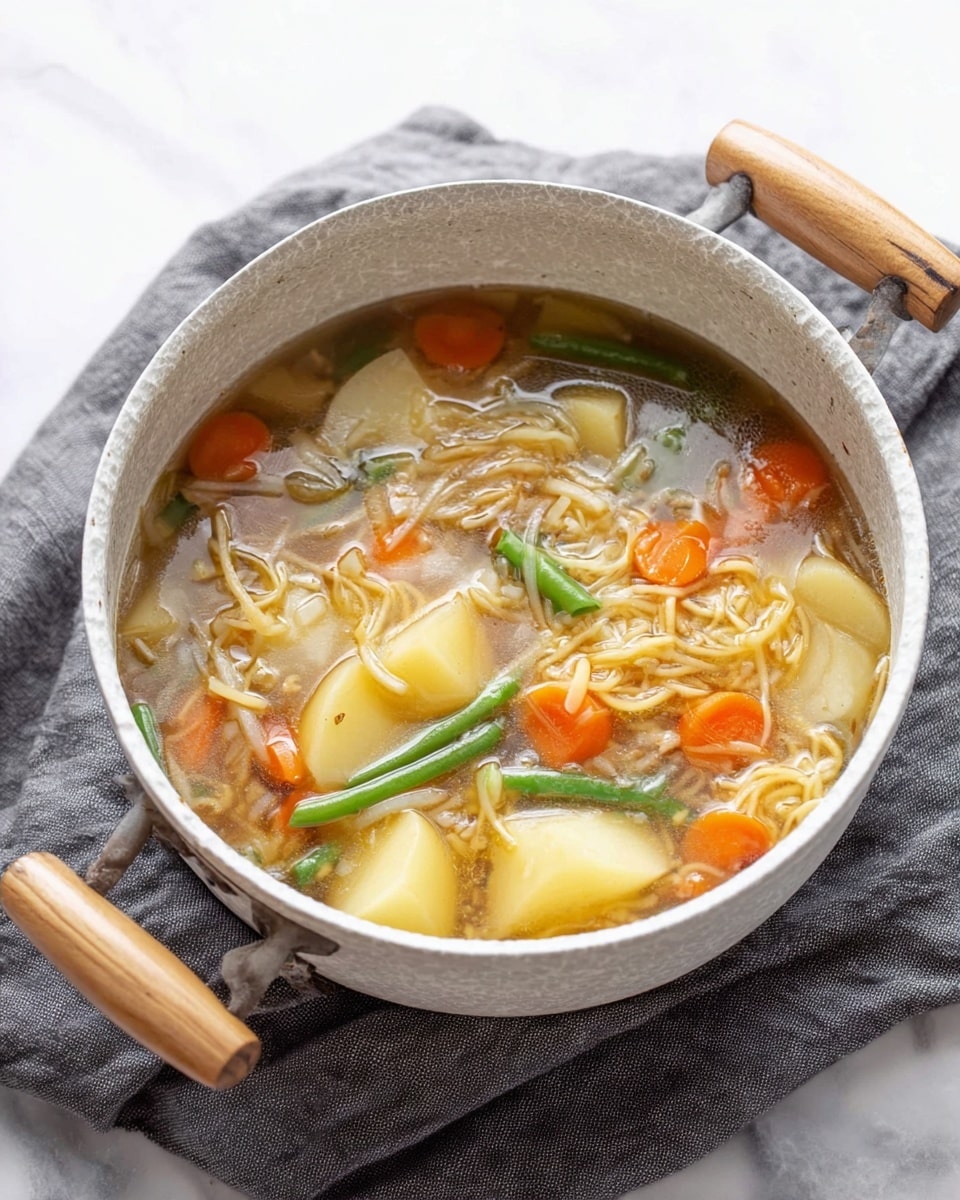
Serve this delicious recipe with your favorite sides.
FAQs
Can I use a different type of meat?
Yes, thinly sliced pork or chicken can be used instead of beef. Adjust cooking times slightly to ensure the meat is cooked through without drying out.
What is the purpose of soaking shirataki noodles in boiling water?
Soaking shirataki noodles in boiling water helps remove their natural odor and improves their texture before adding them to the stew.
PrintOne Pot Nikujaga – Japanese Beef and Potato Stew Recipe
One Pot Nikujaga is a traditional Japanese beef and potato stew that features tender thinly sliced beef, hearty potatoes, shirataki noodles, and vegetables simmered in a savory broth made with dashi, soy sauce, sake, and mirin. This comforting dish is simple to prepare in one pot, delivering rich flavors and a wholesome meal perfect for any day.
- Prep Time: 15 minutes
- Cook Time: 25 minutes
- Total Time: 40 minutes
- Yield: 3 servings 1x
- Category: Stew
- Method: Stovetop
- Cuisine: Japanese
- Diet: Low Calorie
Ingredients
Meat
- 150 g thinly sliced beef
Vegetables
- 3 medium potatoes, diced (350 g / 12.34 oz)
- 1 small carrot
- 1 onion, quartered (white or brown)
- 1 handful green beans, roughly chopped (or substitute snow peas or asparagus)
Noodles
- 100 g shirataki noodles (usually half a packet / 3.52 oz konnyaku/konjac low cal noodles; can substitute sweet potato noodles)
Liquids & Sauces
- 2 ½ cups dashi stock (2.5 tsp dashi powder + 625 ml / 1.3 pints water)
- ¼ cup soy sauce + 1 tbsp (65 ml / 2.19 fl oz)
- ¼ cup sake (or substitute Chinese rice wine, 30 ml / 1.35 fl oz)
- 2 tbsp mirin
Others
- 3 tbsp sugar (45 g / 1.58 oz)
- 1 tbsp vegetable oil
Instructions
- Prepare Noodles: Remove shirataki noodles from the packet and cut roughly in half. Place them in a bowl and cover with boiling water. Let them soak for a few minutes to reduce odor and soften; then drain and set aside.
- Brown the Beef: Heat vegetable oil in a medium saucepan over medium-high heat. Add the thinly sliced beef strips and fry for 1-2 minutes until browned. Pour in soy sauce, sake, sugar, and mirin, allowing the beef to absorb the flavors for another 1-2 minutes.
- Add Vegetables and Noodles: Add diced potatoes, sliced carrot, and quartered onion to the pan. Mix well and then stir in the drained shirataki noodles. Continue frying everything together for another 1-2 minutes to incorporate flavors.
- Add Dashi Stock and Simmer: Pour the prepared dashi stock into the pan and bring to a boil. Once boiling, reduce heat to medium-low to simmer.
- Cook and Skim Foam: As the stew simmers, scoop off any foam or impurities from the surface using a spoon. Stir gently, then cover with a lid or otoshibuta (Japanese drop lid). If you don’t have a drop lid, aluminum foil or a paper towel can be used as a cover. Continue simmering for about 10 minutes, or until the potatoes are tender when pierced with a fork or chopstick.
- Add Green Beans and Finish Cooking: Remove the lid and scatter the green beans on top of the stew. Let them cook on the residual heat for about 1 minute before turning off the stove.
- Serve or Store: Serve the Nikujaga immediately while warm, or let it cool before refrigerating. Reheat gently on low heat to allow the flavors to meld beautifully over time.
Notes
- For a vegetarian version, substitute beef with mushrooms and use vegetable broth instead of dashi stock.
- Shirataki noodles are low-calorie konjac-based noodles that add texture without extra carbs.
- The otoshibuta helps evenly cook the ingredients and prevent overcooking by gently pressing them during simmering.
- You can adjust the sugar and soy sauce according to your taste preference for sweetness or saltiness.
- Leftover Nikujaga tastes better the next day as flavors deepen.
Keywords: Nikujaga, Japanese beef stew, one pot meal, shirataki noodles, potato stew, Japanese comfort food